

Iceland
Travel Guides
Travel Guides
Parking in Iceland is free in most rural areas. But in Reykjavik and at major tourist sites, it's paid — and fees increase every year. Here's everything you need to know to park your car without any nasty surprises.
What you need to know about parking in Iceland
If you're renting a car for a road trip, you'll encounter two types of situations:
Outside these zones — along Ring Road 1 or on mountain tracks (F-roads) — you can generally park freely, as long as you don't block the road or park on fragile vegetation.
If you haven't rented a car yet, check out our guide to car rental in Iceland to avoid the common pitfalls.
In Iceland, always park on rocky or gravel surfaces. Never on moss or vegetation — it takes decades to recover. It's illegal and you can be fined.
Parking in Reykjavik: zones, prices and hours
Reykjavik divides its city centre into 4 parking zones, identified by colour. The closer you get to the centre, the more expensive it is — and the harder it is to find a space.
All zones are free on Sundays and public holidays. Hours vary by zone.
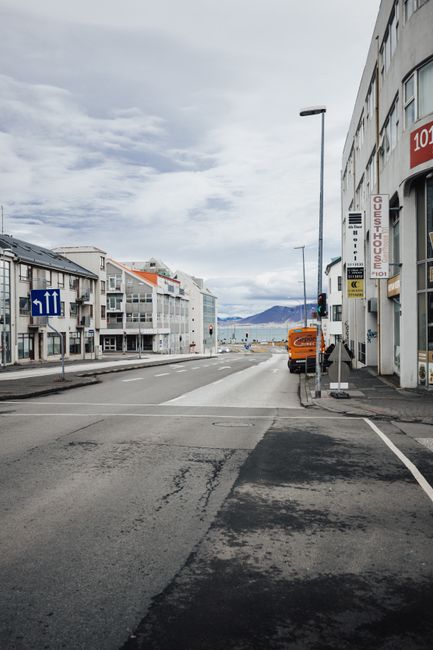
The streets of central Reykjavik — P1 red zone, the most expensive. © Matheus Bertelli / Pexels
P1 — Red (historic centre, Laugavegur)
~660 ISK (660 €) — max 3h
Mon-Fri 9am–9pm / Sat-Sun 10am–9pm
P2 — Blue (around the centre)
~240 ISK (240 €)
Mon-Fri 9am–9pm / Sat-Sun 10am–9pm
P3 — Green (residential areas)
~240 ISK (240 €) (first 2h), then 70 ISK (70 €)
Mon-Fri 9am–6pm / Weekends free
P4 — Orange (outskirts)
~240 ISK (240 €)
Mon-Fri 8am–4pm / Weekends free
Rates are revised regularly by the city. Check up-to-date prices at reykjavik.is before your trip.
To avoid the most expensive zones, park in the P4 orange zone on the outskirts and walk or take the bus into the centre. Covered car parks are also available in the city centre (Hlemmur, Kolaportið) — often cheaper than P1 for stays over 2 hours.
Tip: some Bónus supermarkets have car parks you can use even without shopping.
How to pay for parking in Iceland
In Iceland, you have several options for paying for parking. The mobile app is by far the most convenient — and the cheapest, since you only pay for the exact time you use.
EasyPark and Parka: the two essential apps
The city of Reykjavik officially accepts four apps: EasyPark, Parka, SíminnPay and Verna. In practice, you only need two:
EasyPark — the most widely used app for city parking. Register your plate, start the session and stop it when you leave — you only pay for the actual time. Works in all P1 to P4 zones in Reykjavik, as well as Akureyri, Selfoss and across 20+ countries in Europe.
Parka — the tourist site app. Virtually every major paid natural site uses it (Geysir, Skógafoss, Jökulsárlón, Kirkjufell...). It also works for city parking. One app for your entire road trip.
checkit.is: QR code payment without an app
Some sites (including Seljalandsfoss and Þingvellir) use checkit.is: scan a QR code on the sign and pay by card directly from your browser — no app needed.
Good news: you have until midnight the same evening to pay. If you have no signal on site, you can pay later from your accommodation or campsite.
Landmannalaugar requires mandatory booking in high season (20 June – 14 September, between 9am and 4pm). Book your spot at parka.is before you go.
Pay and display machines: without a smartphone
Parking meters accept bank cards (contactless or chip) in almost all zones. Coins are still accepted on some older machines — but be aware that not all give change.
To download the apps as soon as you land, an eSIM like Yesim gives you network access in seconds without changing your SIM card.
For everything about money and payments in Iceland, check out our guide to money in Iceland.
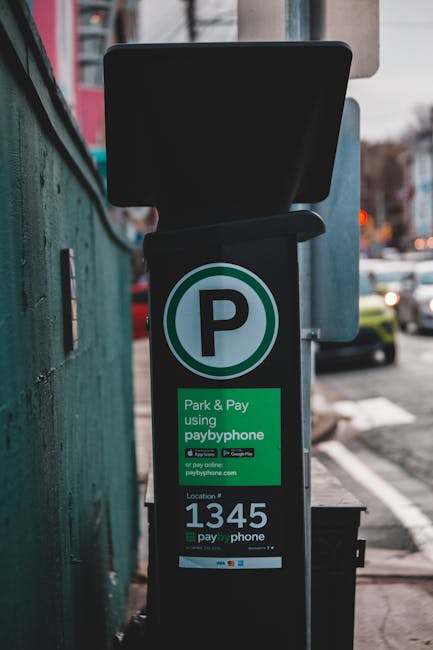
Modern meters accept contactless card payment. © Erik Mclean / Pexels
At some tourist site car parks, payment is made via a QR code displayed on the sign. Scan it with your phone to pay by card directly — no app required.
Tourist site parking: how much does it cost?
As of May 2026, over 45 sites across Iceland now charge for parking. That number has almost doubled in three years. The goal is twofold: fund trail maintenance and manage visitor numbers. Fees are generally charged per car per day, regardless of how many passengers.
Rule of thumb: assume it's paid. If you see a managed car park near a tourist site, look for the sign or QR code before walking away. Paying after the fact with a penalty is much more expensive.
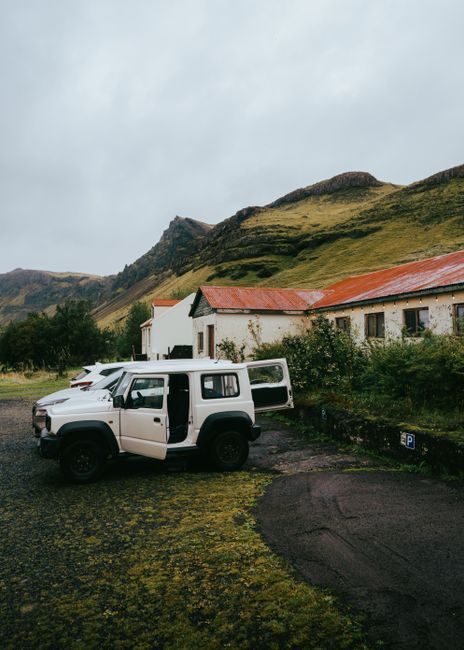
In wild areas, only park on rocky or gravel surfaces. © Artūras Kokorevas / Pexels
Seltún (Krýsuvík)
750 ISK (750 €)
Parka
Reykjanesviti (lighthouse)
1 000 ISK (1 000 €)
Parka
Fagradalsfjall (volcano)
1 000 ISK (1 000 €)
Parka — free access on foot from further away
Þingvellir (national park)
1 000 ISK (1 000 €)
Machine or checkit.is — several car parks on site
Geysir (Golden Circle)
1 000 ISK (1 000 €)
Parka
Gullfoss (waterfall)
Free
—
Brúarhlöð (Bruará canyon)
1 000 ISK (1 000 €)
Parka
Brúarfoss (blue waterfall)
750 ISK (750 €)
Parka — 2 km walk from car park
Faxafoss / Faxi (waterfall)
700 ISK (700 €)
Parka
Kerið (volcanic crater)
600 ISK (600 €) / person
Entrance ticket includes parking
Seljalandsfoss (waterfall)
1 000 ISK (1 000 €)
checkit.is — includes access to Gljúfrabúi
Skógafoss (waterfall)
1 000 ISK (1 000 €)
Parka
Kvernufoss (hidden waterfall)
750 ISK (750 €)
Park at Skógar, short walk
DC-3 wreck — shuttle (Sólheimasandur)
1 000 ISK (1 000 €)
Return bus included from main car park
DC-3 wreck — on foot
750 ISK (750 €)
4 km walk from main car park
Rútshellir (lava cave)
1 000 ISK (1 000 €)
Parka
Sólheimajökull (glacier)
750 ISK (750 €)
Parka
Dyrhólaey (volcanic arch)
750 ISK (750 €)
Parka — closed during nesting season (May-June)
Reynisfjara (lower car park, black beach)
1 000 ISK (1 000 €)
Parka
Reynisfjara (upper car park, cliff views)
750 ISK (750 €)
Parka
Hjörleifshöfði (headland)
1 000 ISK (1 000 €)
Parka
Fjaðrárgljúfur (canyon)
1 000 ISK (1 000 €)
Parka — limited access in high season
Gluggafoss / Merkjárfoss (waterfall)
1 000 ISK (1 000 €)
Parka
Reykjadalur (hot spring valley)
300 ISK (300 €) / hour
Parka — hourly rate, not daily
Múlagljúfur (hidden canyon)
1 000 ISK (1 000 €)
Parka
Fjallsárlón (glacial lagoon)
1 000 ISK (1 000 €)
Parka
Jökulsárlón (glacier lagoon)
1 000 ISK (1 000 €)
Parka
Skaftafell (Vatnajökull NP)
1 040 ISK (1 040 €)
Parka — 2 car parks (East and West Skaftafell)
Stokksnes / Vestrahorn
1 000 ISK (1 000 €) / person
Parka — per person, not per car
Landmannalaugar (highlands)
1 200 ISK (1 200 €)
Parka — mandatory booking in high season (20 Jun – 14 Sep, 9am–4pm)
Sveinsstekksfoss (waterfall)
1 000 ISK (1 000 €)
Parka
Stuðlagil (basalt canyon)
1 000 ISK (1 000 €)
Parka — two access points (east and west bank)
Hengifoss (waterfall)
1 000 ISK (1 000 €)
Parka — includes Litlanesfoss
Hafnarhólmi (puffins, Borgarfjörður)
Variable
Rate varies by season — check Parka before you go
Hverir (sulphurous springs, Mývatn)
1 200 ISK (1 200 €)
Parka
Hverfjall (crater, Mývatn)
1 000 ISK (1 000 €)
Parka
Reykjafoss & Fosslaug (hot spring)
1 500 ISK (1 500 €)
Parka — natural hot spring with pools
Illugastaðir (seals)
1 000 ISK (1 000 €)
Parka — Hvammsfjörður, north-west coast
Húsavík (town centre)
220 ISK (220 €) / hour
Hourly rate in urban zone
Kirkjufell (iconic mountain)
1 200 ISK (1 200 €)
Parka
Arnarstapi (cliffs and arches)
1 000 ISK (1 000 €)
Parka
Malarrif (black beach, Snæfellsnes)
750 ISK (750 €)
Parka
Ytri-Tunga (seal beach)
900 ISK (900 €)
Parka
Helgafell (sacred mountain)
650 ISK (650 €)
Parka
Glanni (waterfall, Borgarfjörður)
1 000 ISK (1 000 €)
Parka
Dynjandi (Westfjords waterfall)
750 ISK (750 €)
Parka — the most spectacular site in the Westfjords
Tourist sites still free in 2026: Gullfoss, Blue Lagoon (outdoor car park), Goðafoss, Aldeyjarfoss, Ásbyrgi, waterfalls near Vík accessible on foot from the main road, and most black sand beaches except Reynisfjara.
Arrive early (before 9am) or late afternoon (after 5pm) to avoid the crowds at major sites. Fewer people, better photos — and a much better experience.
For Golden Circle sites like Þingvellir and Geysir, check out our Golden Circle guide to plan your day. And for Jökulsárlón glacier lagoon, find all the details in our complete guide.
Parking at Keflavik Airport
Keflavik International Airport (KEF) — now officially called Keflavik Airport — has 3 parking zones with very different rates. For short stays, P1 and P2 are close to the terminal but expensive. For trips longer than 3 days, P3 with its shuttle is significantly cheaper.
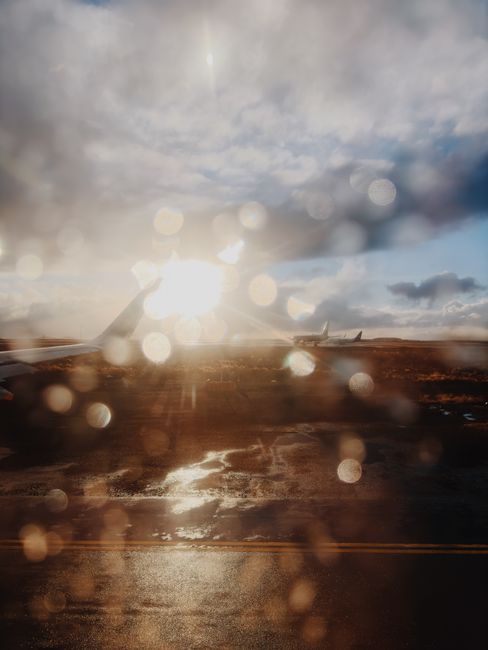
Keflavik Airport — book your parking in advance in high season. © Matheus Bertelli / Pexels
P1 — Comfort
Departure terminal car park (1-2 min walk) — 15 free min/day
7 900 ISK (7 900 €)
P2 — Pick-up
Arrivals terminal car park (5 min walk) — 30 free min/day
7 200 ISK (7 200 €)
P3 — Standard
Free shuttle to terminal — discounted long-stay rate
2 490 ISK (2 490 €)
P3 gets even cheaper from day 9 (1 950 ISK (1 950 €)/day) and day 17 (1 790 ISK (1 790 €)/day). For a 10-day trip, P3 saves you over 50 000 ISK (50 000 €) compared to P1. Book in advance at kefairport.com.
An alternative to parking: opt for a private transfer or the FlyBus shuttle from Reykjavik. This avoids parking costs for longer trips. To plan your arrival, check out our guide on transport from Keflavik.
Rules, prohibitions and fines
Signs to know
Parking fines in Iceland are high. An unpaid parking ticket in Reykjavik costs between 4 000 ISK (4 000 €) and 6 000 ISK (6 000 €). Parking in a resident-only space can cost double. If your rental company has to pay a fine on your behalf, they also charge an admin fee of up to 2 000 ISK (2 000 €).
Parking on Icelandic vegetation (moss, heath) is strictly prohibited. This vegetation can take decades to recover. Rangers patrol protected areas — fines can be very high.
Iceland's only road toll
Iceland has just one toll: the Vaðlaheiðargöng tunnel, near Akureyri in the north. It costs 2 110 ISK (2 110 €) per passage for a standard car.
There's no barrier — the system uses automatic number plate recognition. You must pay at veggjald.is within 24 hours of passing through. If you're renting a car, your rental company may settle the toll on your behalf — and charge additional admin fees.
New 2026 kilometre tax: what you need to know
Since 1 January 2026, all vehicles driving in Iceland pay a kilometre tax of 6,95 ISK (6,95 €)/km (~5 cents/km). It replaces the old fuel taxes.
Factor this into your budget: for a 10-day road trip covering 2,000 km, expect around 13 900 ISK (13 900 €) in additional kilometre tax.
The kilometre tax led to a slight drop in fuel prices at the pump in Iceland. The total cost for drivers remains similar to before — but billing is now separate from filling up.
Wild camping and van overnight stays: the rules
Since 2015, wild camping has been banned in Iceland, including overnight van parking at tourist site car parks. This rule is increasingly strictly enforced in protected national park areas.
For everything about petrol stations, fuel and Icelandic roads, check out our guide to petrol stations in Iceland.
Campervans and van life: parking specifics
If you're travelling by campervan or converted van, the parking rules are the same as for a regular car — with additional important restrictions for overnight stays.

Van life in Iceland is possible, provided you follow the overnight parking rules. © KúKú Campers / Pexels
Where to sleep legally in a van?
Since 2015, wild camping is banned in Iceland. This rule also applies to overnight van parking at tourist site car parks. Legal options:
To find all official campsites and plan your itinerary, check out our Iceland camping guide.
The Park4Night and Heimastað apps list authorised campsites and overnight parking spots in Iceland. Download them before you go — they also work offline.
Iceland Camping Card: if you're planning several nights at campsites, this card covers 28 nights at partner official campsites for a fixed fee. Ideal for long road trips by van or motorhome. Find out more at campingcard.is.
Sleeping in a tourist site car park is prohibited. Rangers patrol, especially around Þingvellir and in national parks. The fine can reach 50 000 ISK (50 000 €).
FAQ — Frequently asked questions about parking in Iceland
Is parking free outside cities in Iceland?
Yes, in most rural areas and along country roads, parking is free. But almost all major tourist sites now charge 1 000 ISK (1 000 €) per car per day (Þingvellir, Skógafoss, Seljalandsfoss, Jökulsárlón...). Gullfoss is an exception: its car park remains free in 2026.
Can I pay for parking in Reykjavik without a smartphone?
Yes. Pay and display machines accept bank cards (contactless or chip) and sometimes coins. But the EasyPark app is the most convenient: you only pay for the exact time used, and you can stop the session remotely.
What is the difference between Reykjavik's parking zones?
Reykjavik has 4 colour-coded zones. The red P1 zone (historic centre, Laugavegur) is the most expensive — 660 ISK (660 €)/h, max 3h. The blue P2, green P3 and orange P4 zones are all around 240 ISK (240 €)/h, but with different hours: P3 and P4 are free at weekends, and P3 drops to 70 ISK (70 €)/h after the first 2 hours on weekdays.
Can I sleep in my van in a car park in Iceland?
No. Wild camping and overnight van parking outside official campsites have been banned since 2015. Fines can reach 50 000 ISK (50 000 €) in national parks. Always use an official campsite or a dedicated motorhome area.
Should I book parking at Keflavik Airport in advance?
It's not mandatory, but recommended in high season (June-August). Booking in advance at kefairport.com can also secure better rates. For trips longer than 3 days, the long-stay P3 car park with shuttle (2 490 ISK (2 490 €)/day) is significantly cheaper than the express P1 car park (7 900 ISK (7 900 €)/day).
What is Iceland's kilometre tax in 2026?
Since 1 January 2026, all vehicles pay 6,95 ISK (6,95 €) per kilometre driven (~5 cents/km), regardless of fuel type (petrol, diesel, electric). For a standard road trip of 200-300 km/day, that's around €10 to €15 extra per day. If you rent a car, this tax is charged by your rental company on the final bill, calculated from the odometer reading at vehicle return.

Got a question? Need advice?
Join our Facebook help group for the country


